Standard Rug Sizes: Guide for Each Room
This blog will guide you through standard rug sizes and common shapes, including rectangular, round, square, and runner styles. Discover the recommended dimensions for various rooms, learn how to select a rug that complements your layout, and discover placement tips for dedicated areas. Refer to our table for a quick glance at what you need.
Standard rug sizes lay the foundation for visual and practical interior styling. Find the perfect fit with this guide.
What are Standard Rug Sizes?
Standard area rugs come in a variety of sizes suitable for different rooms and their layouts.
- Square rugs, such as 4'x4' rugs, 5’x5’ rugs, and 6'x6' rugs, fit perfectly in living rooms and dining areas.
- For long and narrow living spaces, like hallways and entryways, consider runner rugs. Explore sizes like 2’x6’ runner rugs and customizable 3’x12’ runners.
- Round rugs are great if you wish to deviate from traditional boxy designs. Check out sizes, including our customizable round rugs in 4’x4’, 5’x5’, 10’x10’ sizes, and more.
- Rectangular rugs like 3’x5’ rugs, 5’x8’ rugs, and 6’x9’ rugs blend with most rooms. But you can even use 9’x12’ rugs and 10’x14’ rugs for an equally seamless pairing.
- If you’re looking for a rug of a specific dimension, you can get it customized as we offer rug customization services in 90+ sizes.

Recommended Rug Sizes for Every Room in Your Home
Each room in your home can pair well with various rug lengths and widths. Here are some common rug sizes for every room.

Standard Rug Sizes for Living Rooms and Placement
A living room rug usually serves as a large statement piece. It follows the furniture’s layout based on the arrangement of sofas and chairs, and defines zones.
-
10’x14’: A 10’x14’ rug is oversized and can support all the furniture on the rug. This helps create a unified layout in the living room.
-
8’x10’: Suits a medium-sized living room, where only the front legs of the furniture are on the rug. This popular layout is known as partial placement. It offers a visual connection that is cohesive but flexible.
-
5’x8’: A 5’x8’ rug is a popular size for moderate coverage. This rug size suits a living room as a centerpiece, defining the seating area.
For more clarity, read our blog on the best rug sizes for your living room.
Bedroom Rug Sizes and Placement
The right rug size and placement for your bedroom ensures a soft underfoot. Here are your options:
-
9’x12’: This bedroom rug size extends 18” to 24” beyond the bed’s borders when placed under it. This allows side tables to sit atop it. Additionally, check out the best rug sizes for a king bed and rug sizes for a queen bed.
-
6’x9: A 6’x9’ rug is a traditional (medium) size, flexible to complement your bedroom. This bedroom rug is perfect for under-bed placement from the lower two-thirds of the bed. It extends beyond the sides and foot border, offering a soft underfoot when stepped on.
- 5’x8’: It is a small rug and a great addition for compact bedrooms. Place it at the foot of your bed or on the sides, for a warm and soft landing.
Pro Tip: You can also place 2'x8’ runner rugs on both sides of your bed, as they can be lifted and cleaned effortlessly.

Dining Room Rug Sizes and Placement
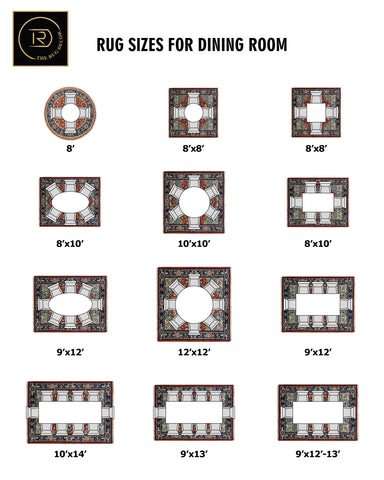
Dining room rug sizes should be practical to facilitate easy movement of chairs. Below are a few options:
-
8’x10’: An 8’x10’ rug is large enough to anchor furniture. It is ideal for a dining room rug. Placing it under the table allows the chairs to move freely.
-
6’x9’: It’s an ideal rug size for a smaller dining room. While the dining table sits on the rug, the chairs, too, would be on its edge when pulled out.
- 5’x8’: This rug size works well to highlight the dining table. It comfortably accommodates smaller dining sets and lets the chair legs remain on the rug when pulled out.
Pro-Tip: Use a round rug in the room, under the dining table. When you do:
- Pick one that extends at least 24” beyond the table’s edge so the chairs remain on the rug even when pulled out.
- Also, capitalize on the visual harmony of the space by centering both the table and rug with the main light fixture above.
Kitchen and Entryway Rug Sizes and Placement
The kitchen and entryway face heavy foot traffic every day. Here’s how choosing the correct rug size for your kitchen and entryway will benefit you.
-
2’x3’ or 3’x5’: They sit perfectly well in a small area, such as by the sink or door. They bring charm to the space while catching splashes, dirt, and moisture.
-
4’x6’ or 5’x8’: These rug sizes are suitable for an open kitchen, defining the area. It also works well for larger entrances, making every entry a grand one.
- Runner rugs: Kitchen runner rugs in sizes 2’x7’ or 2'x10’ runner rugs are perfect for galley kitchens. Place them along the counter for a visually connected pathway. These sizes also work well in narrow entryways, making the space appear longer and wider.
Expert Tip: Choose low-pile, washable, and durable rug materials like polypropylene or cotton. They can withstand daily foot traffic and splashes while also adding flair to the area.
Outdoor Rug Sizes and Placement
The good thing about outdoor rugs is their weather-resistant, rugged nature. But remember that the rug sizes must match the room or space dimensions.
-
2’x3’ or 3’x5’ rugs: These rug sizes work well in entryways, as doormats, or under a small patio table with two chairs.
-
4’x6’ or 5’x7’ rugs: Utilize them as accents under small furniture pieces like coffee tables or patio sets with two to four chairs.
-
5’x8’ or 6’x9’ rugs: The medium-sized rugs work well for intimate outdoor seating areas. Place them under a dining table for four with the front legs of the chairs on the rug.
- 9’x12’, 10’x14’, and 12’x15’ rugs: Use these rugs if your outdoor seating area has larger furniture, like dining for eight people, or expansive patios. This rug should extend beyond the table on all sides to accommodate the chairs when pulled out.
Still uncertain? Get more clarity with our outdoor rug size guide.
If you need a unique rug size to match your room, we offer customization of rugs in 90+ sizes to ensure the rug fits perfectly in your space.
Standard Rug Sizes by Shape
Explore the different rug sizes for your home by their shape, and why you should place them in a room.
Rectangular Rugs
Some rectangular rug sizes include 3’×5’, 4’×6’, 5’x8’, 6’×9’, and 10’x14’ rugs.
- They are preferred because of their ability to fit most rooms. Here are some additional dimensions and styling ideas to assist you with your design.
- A 5’x8’ rug goes well under a small sofa or beside a bed.
- An 8’x10’ rug is perfect to place under the front legs of your sofa and chairs.
- Go with larger rugs, like a 9’x12’ rug, to create zones in open-plan or larger areas.
Round Rugs
Some common rug diameters include 5’x5’ round rugs and larger round 10’x10’ rugs. As for styling tips, a round rug,
- Pairs well with curved furniture or single-seating arrangements.
- Adds visual interest and a soft touch to square or rectangular rooms.
- Goes beautifully under small dining tables, in the foyer.
- Highlights corners of your home, like a reading nook.
Square Rugs
You can find standard square rug sizes ranging from smaller 5’x5’ rugs to larger 8'x8' rugs and 10'x10' rugs. Other customizable sizes include 7’x7’ rugs and 9’x9’ square rugs.
- Square-shaped rugs have a contemporary appeal when placed in similarly shaped rooms or spaces that require perfect symmetry.
- The equal sides of a square rug pair well with square furniture, like dining tables.
- This creates a symmetrical look.
- They also resonate with perfection in square-shaped bedrooms and dining rooms.
Runner Rugs
Our standard runner rug sizes range between 2’ and 3’ wide, to 6’ and 14’ long.
- A runner rug is long and narrow. It is best used for tight spaces and linear traffic areas like hallways or kitchens.
- Use the runner rug in the hallway to create an optical illusion. Its dimensions make the narrow space seem wide and long.
- In a kitchen, the rug can sit between the counters or along the island. This creates an elongated pathway.
Make an informed decision by exploring these hallway runner rug ideas to transform your home.

Oval Rugs
Break away from traditional angular patterns by using an oval rug. Standard rug sizes include 3’x5’ rugs, 4’x6’ rugs, 5’x8’ rugs, and 8’x10’ rugs.
- The rug pairs exceptionally well under a round coffee table or curved furniture in your living room.
- Ground it in a dining room to soften the sharp angles of the rectangular room.
Additionally, we have unmatched rug customization options in 90+ sizes to match your style. So, if you have a certain rug shape or size in mind, our made-to-order rug collection is at your service.
Rug Sizes Chart for Quick Reference
Find the perfect rug size at a glance with this easy-to-read chart.
|
Room/Area |
Furniture Layout |
Standard Rug Sizes |
Rug Placement Ideas/Rule |
|
Living Room |
All legs on the rug (Coffee table or couch) |
9’x12’, 10’x14’, or larger |
It should stretch at least 6” on each side of the couch. |
|
Only the front legs on the rug |
8’x10’ |
It should extend at least 6” beyond the furniture edges. |
|
|
All legs off the rug |
5’x8’, 6’x9’ |
Use to highlight zones, like under the coffee table. |
|
|
Bedroom |
All legs and furniture on the rug |
8’x10’ - Q ueen Beds 9’x12’ - King Beds |
It should extend 18”–24” beyond the sides of the bed.
|
|
Bottom 2 legs on the rug |
6’x9’ |
|
|
|
No legs on the rug |
5’x8’, Runner Rugs |
|
|
|
Dining Room |
Table for 4 |
6’x9’ |
|
|
Table for 6 |
8’x10’ |
Chairs must remain on the rug even when pulled out. |
|
|
Table for 8 or more |
9’x12’, 10’x14’ |
|
|
|
Kitchen |
|
2’x3’, 3’x5’ |
|
|
Centralized in the kitchen |
4’x6’, 5’x 8’ |
|
|
|
Runner rugs for connected aisles |
2.5’x7, 2.5’x9, 3’x9’ |
|
|
|
Outdoor Area |
|
2’x3’, 3’x5’, Runner rugs |
|
|
Small patio set (2 to 4 chairs) |
4’x6’ , 5’x7’ |
Place it under all the furniture legs for a cohesive look. |
|
|
Outdoor dining (4 to 6 chairs) |
5’x8’, 6’x9’ |
|
|
|
Large outdoor lounge (6 to 8 chairs) |
8’x10 ’, 9’x12’, 10’x14’, 12’x15’ |
|
Know your size? Shop Rugs by Size →
How to Choose the Right Rug Size for Your Space
Understanding the rug size rule of thumb simplifies the rug selection and decision-making process. Follow the tips below as a quick reference guide.
Measure Your Room and Furniture Layout First
You need to know your room’s dimensions before you buy a rug. Start by measuring the length and width of your room. Also, account for the placement of key furniture pieces. Noting dimensions ensures the rug fits seamlessly in the layout.
Not sure what size you need? Use our Rug Size Calculator.
Follow the 18–24 Inch Rule Around the Perimeter
When you place a rug in a room, according to the rule, you must leave 18” to 24” of visible flooring. The 18” to 24” spacing rule helps determine effective rug placement, positioning, and balance.
Scale the Rug Size with the Furniture Size
The furniture scale is a relative size, which directly impacts rug sizing, including its coverage and layout. For example, in the living room, only the front legs of sofas and chairs should rest on the rug. Whereas, in the dining area, the rug must extend beyond the chairs so that when pulled out, they remain on the rug.
Visualize with Tape or a Rug Template
There are two ways to envision your rug’s outline before making a purchase.
- The Tape Visualization Method is a low-cost planning, DIY technique. It simulates the rug coverage area to help gauge the expected footprint on the floor.
- The Rug Template Method is a reusable, paper-cutout measuring guide. It assists with room-to-rug proportions to determine visual scale and design balance.
FAQs
What is the 18” Rule for Rugs?
The rule states to leave 18” to 24” of visible flooring between the rug and the walls of the room. It helps frame the rug in the room without making it look cluttered.
Should All Furniture Touch the Rug?
This depends on the size of the room. For open-plan areas where large rugs are used, all furniture should sit atop the rug. For compact rooms, only the front legs need to be placed on the rug.
Can a Rug be Too Big for a Room?
Yes! An oversized rug will fold against the room’s walls. Remember to maintain room-to-rug proportions of about 18” to 24” of space between the rug and the walls, for visual comfort. This ensures balanced aesthetics for a pleasing, symmetrical look.


Share this
Popular posts

Popular posts